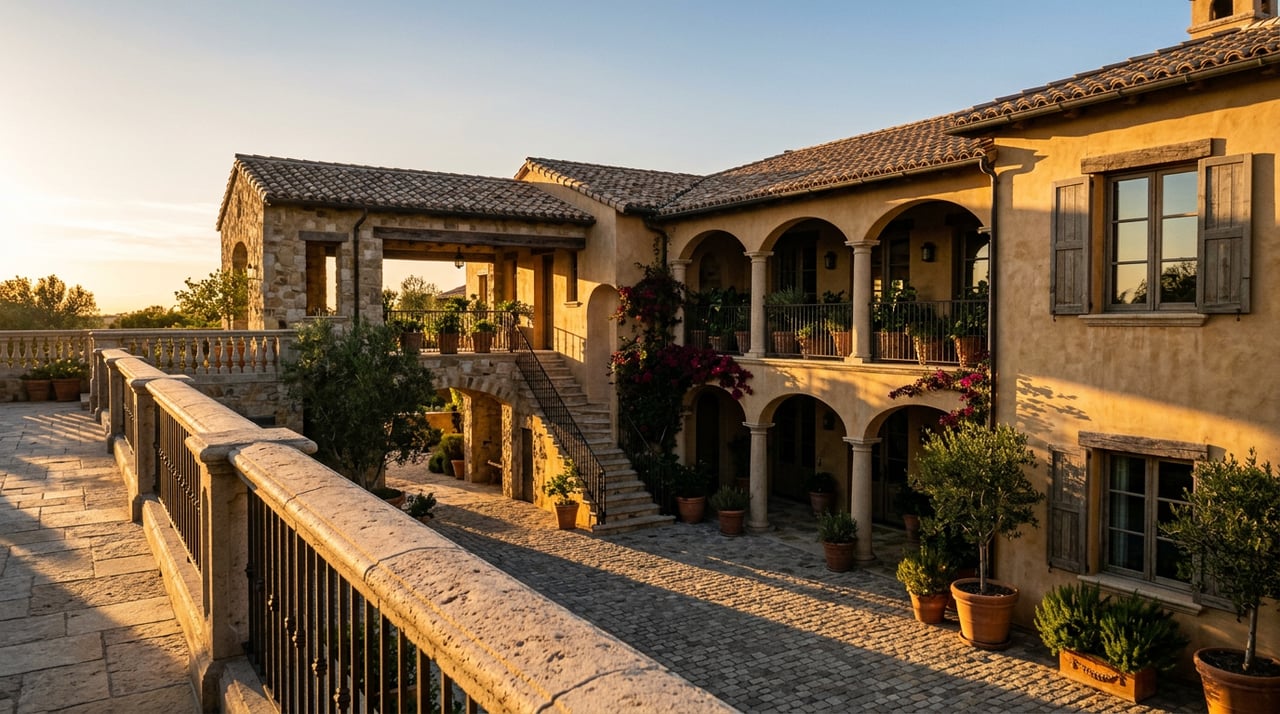
Six Storefronts, Six Months: What Changed on Miracle Mile
September 3, 2026
September 3, 2026
Four blocks of Coral Way. Six storefronts. Six months. That is the entire footprint of what happened on Miracle Mile between January and June of 2026, and it is worth stating in those terms because the scale is easy to miss if you only hear about openings one at a time. A new sandwich counter here, a sushi bar there, nothing that reads as a story on its own. Line the addresses up and the pattern gets harder to ignore: for the first time in years, you can eat a real lunch on the Mile without leaving it.
That is the claim this piece is making, and it holds up against the specifics.
Here is the sequence, address by address:
None of these operators coordinated with each other. Conley's group came from Palm Beach. The Shingo team already had a Michelin star two miles away in the Miami core. El Ñaño's owners were opening their eighth location, their first outside Spain. What they landed on, independently, was the same four blocks, within months of each other, and mostly with menus built around meals Miracle Mile has not historically served during the day.
The most concrete evidence sits at 100 Miracle Mile. Clay Conley's Buccan opened in Palm Beach in January 2011 and earned a spot in the 2025 Florida Michelin Guide. Coral Gables marks his first expansion of that brand and his first Miami-Dade restaurant since he left Azul at the Mandarin Oriental in 2010. Rather than open one dining room, Conley's Ember Group split the address into three: Buccan itself, with an open kitchen and wood-burning oven; Imoto, a sushi bar entering from Galiano Street and drawing on Conley's time in Tokyo; and Buccan Sandwich Shop, a lunch counter known in Palm Beach for its beef carpaccio baguette and the Beef Steak Bomb.
The order of openings tells you something. The Sandwich Shop went first, on May 9, weeks ahead of the full-service restaurant on May 22 and Imoto on June 8. A group with a Michelin-recognized flagship chose to introduce itself to Coral Gables through a sandwich counter before anything else. The building itself is new construction, a low-rise from developer MAS^AJP on a parcel that used to hold a three-story office occupied by SunTrust Bank and H&R Block, which means the entire footprint was designed from scratch with three separate hospitality tenants in mind rather than retrofitted into an old bank lobby.
A few doors down, chef Shingo Akikuni and partner Kenzie Motai took a different approach to the same problem. Akikuni built one of Miami's first Michelin-starred restaurants with Shingo. Stand, which opened June 4 at 98 Miracle Mile, seats 24 people and serves Japanese egg salad sandwiches, milk bread, matcha, and bento boxes during the day. There is no dinner service to speak of. The entire concept is built around the meal the Mile has historically skipped.
That distinction matters more than it might look. A Michelin-adjacent chef opening a full dinner room on the Mile would have been unremarkable. Opening a daytime-only café is a bet that the neighborhood can now support a second kind of business, one that lives or dies on lunch traffic and coffee runs rather than reservations.
Not everything happened directly on the Mile. Casa MX, which opened January 24 at 2345 SW 37th Avenue, sits a few blocks south and west of the core in a converted 2,800-square-foot Coral Gables residence. Owner Mario Bernal, whose résumé runs through The Hotel Victor, The Setai, Rosa Mexicano, and a decade with the José Andrés Group, hired Bogotá-based architect Manuel Lizarralde, who spent a month in Mexico City before reworking the house into a 150-seat restaurant with a 52-seat patio and a 12-seat bar. Chef Kevin Acosta's menu splits between shareable plates like duck confit flautas and mezcal queso fundido and large-format dishes like costilla y chayote, beef ribs glazed in guajillo beer.
At its debut, Casa MX ran dinner Tuesday through Thursday and weekend lunch, with the ownership team describing plans to add daily lunch and brunch as the restaurant matured. Even a dinner-first restaurant built around a residential feel was angling toward daytime hours from the start, which is itself a small data point in the same direction as everything else on this list.
El Ñaño's arrival at 339 Miracle Mile adds a different kind of texture. Founded in Barcelona in 2003 by chef Eloy Mera and co-founder Mildre Gómez, the restaurant spent two decades building a following across Barcelona, Madrid, and Zaragoza before choosing Coral Gables, rather than Brickell or Miami Beach, for its first American address. It is a smaller signal than the Buccan complex, but it points the same way: operators with options are choosing this particular stretch of Coral Way.
The other half of the story is what left. Vinya Table, a wine-focused bistro at 266 Miracle Mile, closed in late December 2025 after four years, a casualty that predates the wave of openings but sets the baseline against it. Owner and sommelier Allegra Angelo described the closure as a shift in focus rather than an ending, and the brand's original location, Vinya Wine & Market in Key Biscayne, remains open. At the time of the closure, no replacement tenant had been announced for the Miracle Mile space, a reminder that not every storefront on the Mile fills as quickly as the openings elsewhere on this list might suggest.
Part of the answer is architectural. The 100 Miracle Mile building was constructed as new low-rise space explicitly meant to house multiple hospitality tenants rather than a single retail lease, which is part of why Conley's group could split one address into three distinct businesses with separate entrances. Part of it is civic. The City of Coral Gables has actively marketed available Miracle Mile storefronts, including a listing for the space at 278 Miracle Mile, specifically toward chef-driven restaurant concepts rather than generic retail, which suggests the city itself has been trying to steer this exact outcome.
And part of it is a food hall a block off the Mile that has not opened yet but tells you where the demand is aimed. Zuccaly, an 8,000-square-foot, six-station Italian food hall from Da Silva Hospitality, the group behind longtime neighborhood restaurant Zucca, is under construction at 111 Palermo Avenue inside The Plaza Coral Gables. As of the most recent local coverage, the project had no firm opening date beyond a summer 2026 target, but its design tells you what it is for: a weekday 2-for-1 happy hour built to draw in, as the group has said, the residents and office workers already nearby. That is a business model that only makes sense if enough people are already spending their weekday hours on or near the Mile to justify it.
Put together, the pattern is not a single trend piece about a Michelin chef or a viral sandwich shop. It is four blocks of Coral Way where several operators, working from different cities and different playbooks, arrived at the same conclusion within the same six months. If you left the Gables for lunch last year out of habit, that habit is worth checking against what is actually on the block now.
If you are watching how a neighborhood like Coral Gables evolves and want a read grounded in how people actually live here, from the daytime rhythm of Miracle Mile to what a shift like this can mean for the surrounding blocks, Pasquale Pisana is glad to talk it through. Let's Connect.
Are you interested in buying a home? Look no further than working with a real estate expert.


Your Complete Guide to Buying Property in Brickell: Miami's Premier Urban District
The Complete Guide to Florida Real Estate for Foreign Buyers: Essential Rules and Regulations

Cryptocurrency vs Real Estate Investment: A Comprehensive Comparison Guide

Get assistance in determining current property value, crafting a competitive offer, writing and negotiating a contract, and much more. Contact me today.